How a Classroom Boss Battle Can Transform Student Engagement (And Why It Works)
Picture this -
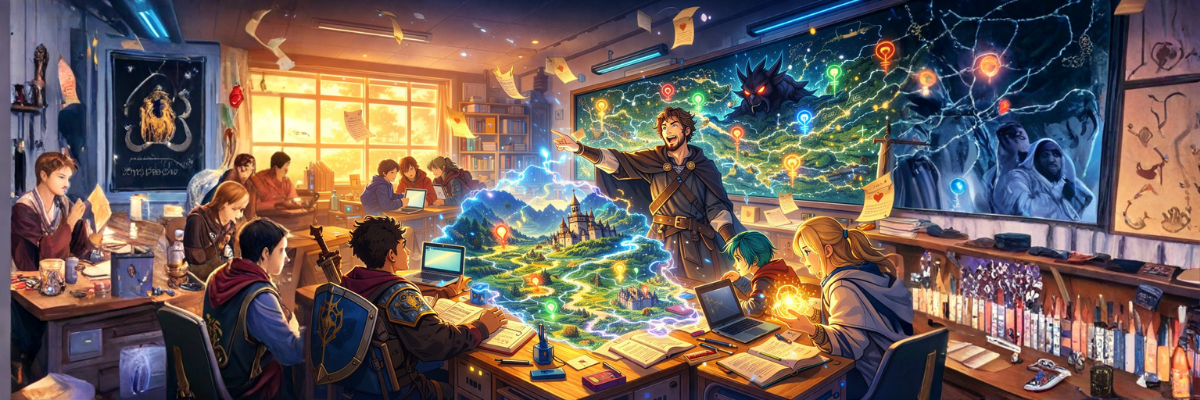
It's Tuesday afternoon, third period. Normally, this is the hour when energy dips, phones appear under desks, and glazed eyes stare at the clock.
But today, the classroom is electric.
Students are leaning forward.
Someone just shouted.
Two kids in the back are quietly strategizing.
The teacher stands at the front, narrating, and every student in the room is hanging on every word.
What changed?
There's a boss battle happening today.
Why Traditional Engagement Strategies Fall Short
Every teacher knows the challenge. You can plan the most creative lesson, design the most thoughtful activity, and still lose half the room before the first ten minutes are up. Traditional reward systems, stickers, points, verbal praise, work for some students, some of the time. But they rarely create momentum. They rarely make a student feel like the stakes are real.
Gamification in education has been growing for years, and for good reason. Research consistently shows that game-based learning increases motivation, improves retention, and makes students more willing to take academic risks. But most classroom gamification tools stop at surface-level mechanics; leaderboards, badges, point tallies. They add a game skin to the same old structure.
What happens when you go deeper? What happens when the game itself becomes the reason students want to show up?
Enter the Boss Battle — A Classroom Event Like No Other
In truly immersive classroom RPGs, a boss battle isn't just a quiz dressed up with a monster icon. It's a shared narrative event — one the entire class experiences together, with real consequences, real cooperation, and real stakes built up over weeks of preparation.
Here's how it works in practice:
Every student in the class plays as a unique character - a hero with a name, a level, a set of abilities, and a personal story. Throughout the weeks and months leading up to a boss battle, students earn XP and gold by completing quests (assignments), demonstrating good behavior, and mastering content. Their characters grow. Their stats improve. The better a student performs, the more powerful their hero becomes.
Then the boss arrives.
The Mechanics of a Live Boss Battle
When the teacher launches a live boss battle, the whole class faces the same enemy together. The boss has a massive health pool that no single student can chip away alone. Cooperation isn't just encouraged, it's mechanically necessary.
Each student answers questions to deal damage. Answer correctly, and your hero lands a hit. Miss, and the boss hits back. The class watches the boss's health bar drop (or rise) in real time. Every correct answer matters. Every student's contribution is visible and meaningful.
But here's where it gets truly exciting: class powers.
As students have leveled up and accumulated gold throughout the semester, each student has unlocked abilities -special powers that can turn the tide of battle. A healing surge that restores the class's collective health. A critical strike that doubles damage for one round. A guard that blocks an incoming boss attack. These powers are finite, precious, and strategic. When to use them is a real decision the class has to make together.
That moment when a student shouts "Use Divine Judgement NOW!" and the class votes in three seconds, is pure collaborative learning wearing the costume of an epic fantasy battle.
Why Students Play Harder Before the Battle Starts
One of the most powerful effects of a boss battle system is what happens before the battle itself.
When students know a boss battle is coming, the weeks leading up to it take on new meaning. That quest they've been putting off? Completing it means more XP, a higher level, better stats. That gold they've been hoarding? It could fund potions to strengthen them during the battle. That behavior point they almost threw away? It might be the difference between their character surviving round three or getting knocked out.
The boss battle creates a future payoff that makes present effort feel worthwhile. Students begin to think ahead. They ask questions like: "Are we ready?" "What level do we need to be?" "Can we still unlock the Regeneration Field before Friday?"
This is self-regulation and intrinsic motivation, the holy grail of student engagement, emerging organically from a game structure.
The Narrative Is the Secret Ingredient
What separates a truly memorable boss battle from a glorified review game isn't the mechanics...it's the story.
The best classroom RPGs build narrative over time. The boss isn't just a random monster. It's a villain with a backstory, a grudge, a reason for being there. Students have heard about this enemy for weeks. Maybe they encountered its minions in earlier quests. Maybe one of the class's story arcs hinted at the final confrontation. By the time the boss appears on screen, students care about defeating it....not just to win points, but because they're invested in the world they've been living in.
This is the power of story driven gamification. When learning is embedded in a narrative students are emotionally connected to, content becomes context. History, science, literature, math....it all becomes the knowledge your hero needs to survive.
What This Looks Like for Real Classrooms
Tools like Academy of Heroes are built specifically around this philosophy. Teachers create a living classroom RPG where students build characters, complete quest-based assignments, engage in patrols and duels, and ultimately face live boss battles as a unified class. The system tracks XP, gold, levels, and behavior — all feeding into the shared boss battle experience.
The result isn't just engagement. It's a classroom culture where students are invested in each other's success, where showing up to class feels like showing up for your team, and where the teacher becomes the dungeon master of the best learning adventure their students have ever been on.
The Bottom Line
Boss battles work because they combine everything that motivates human beings: narrative, collaboration, stakes, agency, and the deep satisfaction of collective victory. They give students a reason to care, not just about the game, but about the learning underneath it.
If you've been looking for a way to make your classroom feel alive again, start thinking like a game designer. Give your students a monster worth defeating. Give them the tools to grow powerful enough to face it. Then step back and watch what they're capable of.
The Enemy is waiting.
Is your class ready?
Ready to bring boss battles to your classroom? Academy of Heroes gives teachers everything they need to run immersive, story-driven classroom RPGs — quests, leveling, guild management, live boss battles, and more.
Ready to bring the adventure to your classroom?
Academy of Heroes turns your class into an RPG — students level up, earn abilities, and go on quests. Free to try, no credit card required.
Start Your Free Trial →